
Daily Ways to Benefit From Herbs
For a long time, herbs were the forgotten part of health. People chose a bland diet or a processed food diet that left herbs out of the list of foods they consumed. They may have been taught that herbs added to foods were what was causing their stomach to hurt during the day – when in reality, the lack of herbs most likely was the cause!
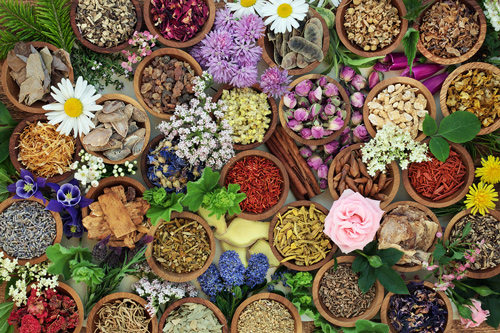
What’s in Herbs That Matters to Your Health
Herbs fill in the metabolic gaps of what foods can’t provide. They contain hundreds of medicinal component that act on multiple parts of the body simultaneously. You can’t possibly create a food that could do similar things!
Herbs offer you polyphenols, flavonoids, minute amounts of vitamins and minerals, carotenoids, and numerous other active ingredients that have been found to have positive effects in your body. These plant chemicals or phtyochemicals are so important; yet you were led to believe they are worthless!
How the Pharmaceutical Industry Tries to Mimic What’s in Plants
In fact, they are so important that the pharmaceutical industry hires people to go to other countries to speak to herbalists and shamans about the plants that they use in treatment of their residents. The pharmaceutical agents then return to the U.S. with the plants and take them to their laboratories.
This is when the hunt for these important plant chemicals starts. Their goal is to isolate the chemicals that are active in the body – and then try to mimic them and turn them into a drug patent. The problem of course is that mimicking them never works – and is always fraught with side effects. Yet one-half of all licensed drugs that were registered over a 25-year period prior to 2007 were natural products or their synthetic derivatives, proving the importance of herbs to us.
The Real Value of Plants
Plants have secondary biochemical pathways that allow them to synthesize a raft of chemicals often in response to environmental stimuli. For example, in times of nutrient depravation, or plant damage from animals, birds or insects, or microbial attacks, these chemicals are produced in copious amounts. These secondary metabolites allow the plant to increase its ability to survive and overcome the challenges of the environment.
Some of the roles of secondary metabolites are included in this list below:
- UV-light absorbing
- free radical scavenging
- antioxidant
- antibacterial
- antifungal
- antiviral
- antagonize neurotransmitters of insects or other predators
- hormonal like analogs
- signaling molecules for different pathways in animals and plants such as the nitric oxide pathway
- prostaglandins involved in anti-inflammation and inflammation
- redox signaling molecules
- neuropeptides found in humans
- acetylcholine (stops aggressive behavior in enemies)
Each of these types of secondary metabolites can be utilized by your human body – for good.
How to Incorporate Herbs into Your Daily Routine
The key to health then is to start incorporating some herbs into your daytime activities. Here’s a list of some ways to do this:
- With at least one meal of the day, have a cup of herbal tea. It could be a cup of ginseng or gotu kola or yerba matte tea in the morning to wake your body and brain up. Or for lunch, it could be a cup of maca, Suma, or shizandra tea to normalize your body functions – heart rate, respiration rate, blood pressure, and cholesterol levels.
- You might add a cup of an aphrodisiac tea to your daily routine such as damiana, oatstraw, or horny goat week to get you in the mood for some lovemaking.
- You could also take a cup of lemon balm, chamomile, or valerian tea to relax you and wind your mind down so you can sleep later on.
- You could also start making green tea, and have a quart of it in the refrigerator at any time. Then when making rice or other dishes that call for water, you could substitute green tea for the water. This way you’ll gain the benefits of the green tea.
- Ever think of adding herbs to your smoothies? Why not add a teaspoon of one or a few herbs to gain the benefits?
- You could also add herbs to your favorite brownie recipe. The way to do this is to either choose mild-tasting herbs or ones that are less bitter than the chocolate found in the brownies.
There’s much to say for adding herbs to your daily routine. All you have to do is start the process, never look back, and keep perfecting it. You’ll discover hundreds of new uses for herbs – and feel better for it.
Source:
Kennedy, David O. and Wightman, Emma L. Herbal extracts and phytochemicals: Plant secondary metabolites and the enhancement of human brain function. Adv Nutr 2011 Jan;2(1):32-50.